Choosing a Seminar, Screening, or Reading Circle for Casino Culture
Compare casino culture lesson formats and choose the one that fits your source, learning aim, and students’ access needs without adding activities that do no work.

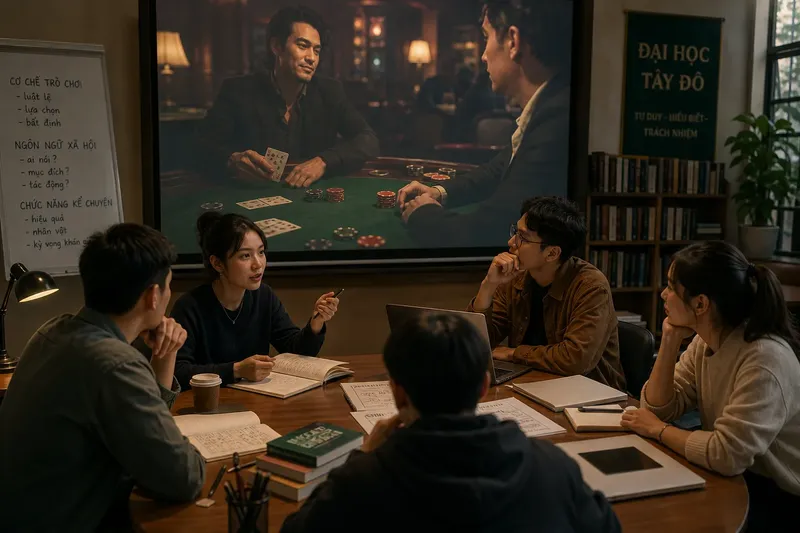
For a casino culture lesson at Đại học Tây Đô, choose the format that fits the evidence students need to work with. A seminar helps them compare claims, a screening makes visual and sonic choices available for analysis, and a reading circle focuses attention on a written text. The best choice is the one that gives the class a clear task.
Formats can be combined, but each should contribute something the others cannot. Begin with the learning aim and the materials students can access; a lively-looking activity is not, by itself, a reason to put it on the syllabus.
What should a casino culture lesson help students do?
Casino culture can be examined through institutional language, public messaging, personal narrative, film, and other cultural material. The format shapes how students handle that material. A seminar can put claims side by side, a screening can direct attention to framing and sound, and a reading circle can slow the group down over a text’s wording and structure.
Write the aim as a plain sentence before choosing. “Students will compare how two sources describe risk” points toward a seminar with paired materials. “Students will examine how a scene creates spectacle” calls for a screening. “Students will trace how a writer’s terms shape an argument” suits a reading circle.
It is not worth adding a screening just because a clip is available or assigning a long text to make a session feel substantial. The format should make the intended work easier to do.
When does a seminar fit casino culture?
A seminar is useful when students need to compare sources, examine disagreement, or connect an interpretation to specific material. Conversation is only the surface activity; the central task is to make readings clear enough for other people to question or qualify them.
Keep the prompt narrow. Students might compare an invented public-facing description of a casino setting with an invented critical commentary. Ask what each emphasizes and which details support that reading. The point is to compare the sources’ choices, not to turn two short texts into a verdict about casinos generally.
- Check the sources: If they offer distinct perspectives, pair them; if they repeat the same point, replace one with material that gives students a different basis for comparison.
- Check the question: If it asks about one defined feature, keep it; if it combines representation, history, and ethics, narrow it to a single task.
- Check access: If everyone can use the same text or excerpt, proceed; if not, provide an accessible alternative or choose material the whole group can reach.
- Check the evidence: If students can point to a passage, image, or stated claim, invite competing interpretations; if they have only general impressions, add a shared source or revise the prompt.
- Check participation routes: If spoken discussion suits the group, begin with open exchange; if students need preparation time, start with quiet notes or paired discussion.
- Check the scope: If one question fits the chosen material, use it; if the material raises several separate issues, set the extras aside for another session.
A seminar loses focus when every related issue receives equal time. Keep a short list of side questions for later. No class needs to become a committee with a reading list.
What does a screening add?
A screening fits when visual or sonic choices are part of the question. Students can attend to camera framing, editing, performance, music, or ambient sound. Those features provide material that a discussion of written wording alone cannot supply.
Give students a viewing task they can answer by describing what appears or sounds. They might note which people remain in frame during a decision or when background sound becomes prominent. Move from observation to interpretation, so an impression does not have to do the work of a detail.
Check captions and playback before class, and provide a transcript or description where needed. If the material includes potentially distressing content, describe it plainly in advance and offer a way to participate without viewing it. These are ordinary teaching arrangements, not decorative extras.
A screening is a poor fit when the lesson depends on comparing written wording and the clip supplies no relevant material. Replaying every moment is not necessary; select the passages that bear on the question.
Why choose a reading circle?
A reading circle keeps a written source at the center and shares the work of interpreting it. A short essay, interview, review, public statement, or selected passage can support close attention to definitions, audience, argument, and what the text leaves unstated.
Ask each student to bring a passage that makes a claim, a phrase whose meaning seems important, or an unresolved question. The shared starting point offers a way into discussion and helps the group return to the text when it drifts toward general opinion.
Choose material for its relation to the aim. An invented promotional description can support a discussion of persuasive language; an invented policy document can clarify institutional terms. Neither automatically covers every perspective on its subject. The class can focus on what the text makes available for discussion without treating source analysis as the whole lesson.
How do the three casino culture formats compare?
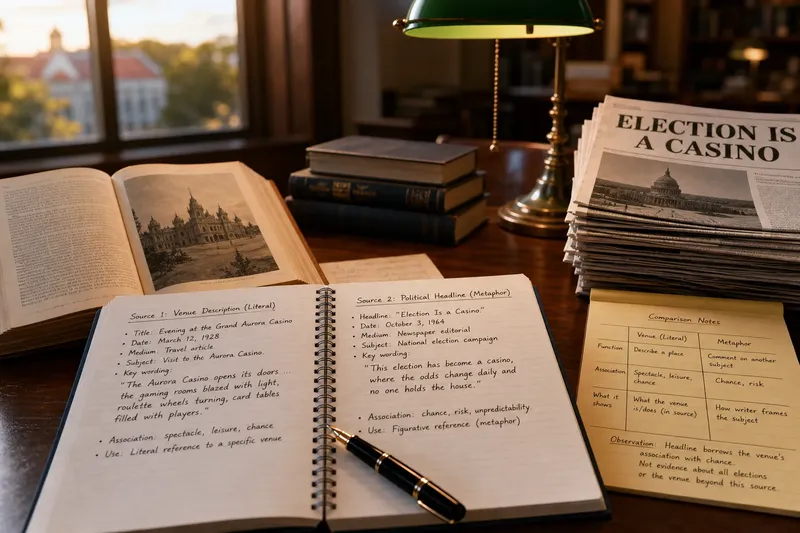
Say an invented class at Đại học Tây Đô has two invented materials: a short fictional venue description that presents a casino as entertainment and a fictional commentary that questions that framing. The stated aim is to compare how each text defines the setting. The instructor chooses a seminar because students need to place two written arguments side by side; a screening would add little to this task.
Students mark one phrase in each text that shapes its description. They draw two columns on paper, headed “emphasized” and “not addressed,” then place each phrase under the heading that fits. Suppose the fictional description emphasizes atmosphere while the fictional commentary emphasizes institutional choices. Students can point to those phrases and describe the contrast. The decision is to keep the seminar: it supports the comparison, while the tradeoff is that the session does not examine image or sound.
If the aim instead concerned camera framing or soundtrack, the instructor would choose a screening and use a relevant clip. If the aim concerned one text’s wording and structure, a reading circle would fit better. Combining formats makes sense only when each adds material needed for the question.
- Choose a seminar: If students need to compare claims or perspectives, use paired sources; if the task is close attention to one source, choose a reading circle instead.
- Choose a screening: If image, editing, performance, or sound is central, use relevant audiovisual material; if the question concerns written wording, use a reading circle instead.
- Choose a reading circle: If students need to examine a text’s language or argument, center the session on that text; if comparison across sources is central, choose a seminar instead.
- Combine formats: If each contributes material required by the aim, combine them; if one adds no relevant evidence, leave it out.
What questions help choose a casino culture format?
How can a class decide between a seminar and a reading circle?
Use a seminar when the task depends on comparing sources or positions. Use a reading circle when the main work is examining how one text’s language or structure develops its argument.
When does a screening belong in the lesson?
Choose a screening when students need to discuss visual or sonic choices, such as framing, editing, or sound. If the aim can be met with written materials alone, the screening may add little.
Can formats be combined in one session?
Yes, if each format serves a distinct part of the learning aim. For example, a short screening could supply a visual detail for a seminar comparison; omit it if the comparison does not depend on that detail.
How can students participate without sharing personal experience?
Make personal disclosure optional and treat analysis of the assigned material as a complete way to contribute. Students can offer a written observation, ask a question about the source, or compare its features.
How can a lesson stay focused?
Record the learning aim, shared material, and evidence students should work with in a brief planning note. If discussion drifts, return to a specific passage, image, or sound and ask how it relates to the aim. A concrete prompt gives students a task they can answer rather than a vague request to stay on topic.
For casino culture teaching at Đại học Tây Đô, the format organizes attention rather than determining what students will conclude. Choose a seminar, screening, or reading circle according to the work the material supports, and leave other work for another session when it does not fit. The search phrase “casino culture lesson formats” points to a practical choice: match the format to the evidence students need, not to the activity that looks busiest on the syllabus.